
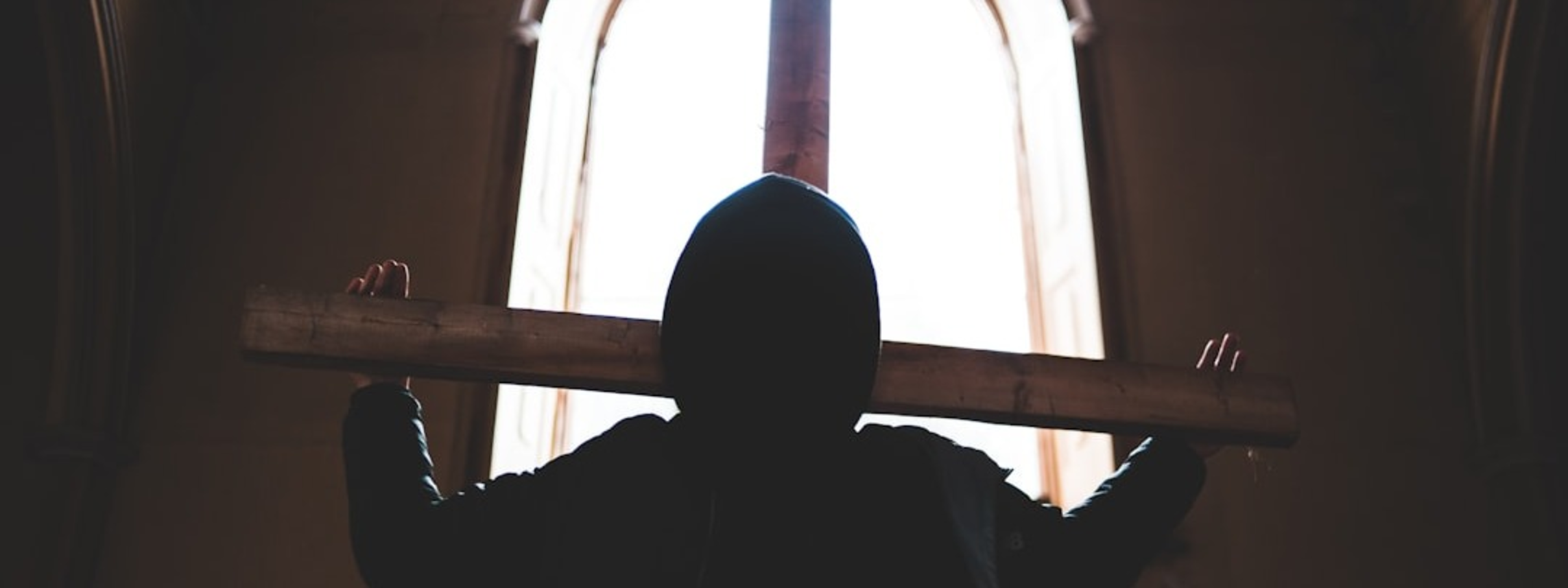
Are you up to the call? - 28-06-2026
Thirteenth Sunday in Ordinary Time
First Reading
2 Kgs 4,8-11.14-16a.
One day Elisha came to Shunem, where there was a woman of influence, who urged him to dine with her. Afterward, whenever he passed by, he used to stop there to dine.
So she said to her husband, "I know that he is a holy man of God. Since he visits us often,
let us arrange a little room on the roof and furnish it for him with a bed, table, chair, and lamp, so that when he comes to us he can stay there."
Sometime later Elisha arrived and stayed in the room overnight.
Later Elisha asked, "Can something be done for her?" "Yes!" Gehazi answered. "She has no son, and her husband is getting on in years."
"Call her," said Elisha. When she had been called, and stood at the door,
Elisha promised, "This time next year you will be fondling a baby son." "Please, my lord," she protested, "you are a man of God; do not deceive your servant."
Responsorial Psalm
Ps 89(88),2-3.16-17.18-19.
The favors of the LORD I will sing forever;
through all generations my mouth shall proclaim your faithfulness.
For you have said, “My kindness is established forever”;
in heaven you have confirmed your faithfulness.
Blessed the people who know the joyful shout;
in the light of your countenance, O LORD, they walk.
At your name they rejoice all the day,
and through your justice they are exalted.
For you are the splendor of their strength,
and by your favor our horn is exalted.
For to the LORD belongs our shield,
and to the Holy One of Israel, our King.
Second Reading
Rom 6,3-4.8-11.
Brothers and sisters: Are you unaware that we who were baptized into Christ Jesus were baptized into his death?
We were indeed buried with him through baptism into death, so that, just as Christ was raised from the dead by the glory of the Father, we too might live in newness of life.
If, then, we have died with Christ, we believe that we shall also live with him.
We know that Christ, raised from the dead, dies no more; death no longer has power over him.
As to his death, he died to sin once and for all; as to his life, he lives for God.
Consequently, you too must think of yourselves as (being) dead to sin and living for God in Christ Jesus.
Gospel
Matt 10,37-42.
Whoever loves father or mother more than me is not worthy of me, and whoever loves son or daughter more than me is not worthy of me;
and whoever does not take up his cross and follow after me is not worthy of me.
Whoever finds his life will lose it, and whoever loses his life for my sake will find it.
Whoever receives you receives me, and whoever receives me receives the one who sent me.
Whoever receives a prophet because he is a prophet will receive a prophet's reward, and whoever receives a righteous man because he is righteous will receive a righteous man's reward.
And whoever gives only a cup of cold water to one of these little ones to drink because he is a disciple--amen, I say to you, he will surely not lose his reward."
YOUCAT Reflection
102 Why are we too supposed to accept suffering in our lives and thus "take up our cross" and thereby follow Jesus?
Christians should not seek suffering, but when they are confronted with unavoidable suffering, it can become meaningful for them if they unite their sufferings with the sufferings of Christ, "Christ ... suffered for you, leaving you an example, that you should follow in his steps" (1 Pet 2,21).
Jesus said, "If any man would come after me, let him deny himself and take up his cross and follow me" (Mk 8,34). Christians have the task of alleviating suffering in the world. Nevertheless, there will still be suffering. In faith we can accept our own suffering and share the suffering of others. In this way human suffering becomes united with the redeeming love of Christ and thus part of the divine power that changes the world for the better.
___________________________________________________________________________________
“If anyone wishes to come after me, let him deny himself and take up his cross daily and follow me” (Lk 9:23). These words denote the radicality of a choice that does not allow for hesitation or second thoughts. It is a demanding requirement that unsettled even the disciples and that, throughout the ages, has held back many men and women from following Christ. But precisely this radicality has also produced admirable examples of sanctity and martyrdom that strengthened and confirmed the way of the Church. Even today these words are regarded as a stumbling block and folly (cf. 1 Cor 1: 22-25). Yet they must be faced, because the path outlined by God for his Son is the path to be undertaken by the disciple who has decided to follow Jesus. There are not two paths, but only one: the one trodden by the Master. The disciple cannot invent a different way.
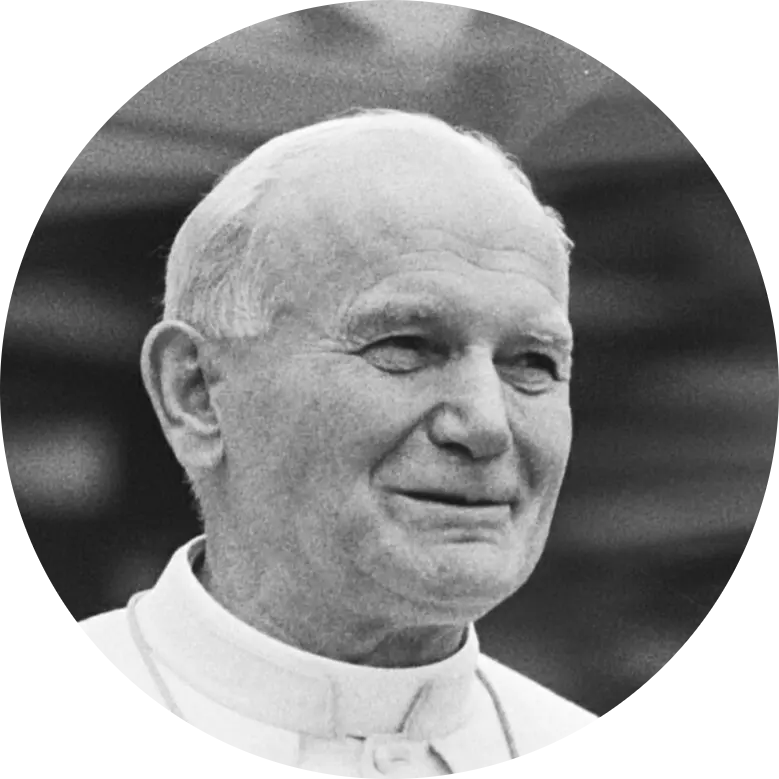
Pope John Paul II, XVI WORLD YOUTH DAY 2001